Showing posts with label Sister Cities. Show all posts

Friday, July 23, 2010

Final China Images Before Moving On


Not too long ago Michael Ma, a sweet young man who works for the Service Center for International Exchanges in the Xicheng District of Beijing, would have been imprisoned for wearing this shirt. He accompanied our delegation almost everywhere and we got to know him pretty well during our China sister city trip. He's a big fan of B.B. King and other American blues artists, and his dream is to come to the U.S. someday for a taste of authentic blues. I showed him some of my blog photos from Memphis related to B.B. King, and he was practically overcome with joy.

The 161 Middle School is on the grounds of a set of ancient buildings that once were part of the Forbidden City. And we think Pasadena schools are historic! Students from 161 and Blair High School have been communicating with each other via the Internet for more than 10 years, and delegations of students have visited each other's communities.


Here's Phil Montez, a member of the Pasadena Sister Cities Committee, in our Beijing hotel lounge with Judy Kent and yours truly. When we were in Shanghai, he heard a group of people speaking Korean. After he approached them and told them he had fought for the good guys in the Korean War, they very emotionally said to him, "Thank you for saving our families." It was quite touching. (This photo was shot by Fred Alcantar.)


There were several welcome banners indoors and outdoors throughout the Xicheng District.


Ceiling shot at Beijing Airport:


Mayor Bogaard carried this great tote bag from Art Center College of Design on our travels.


People with umbrellas out our bus window in Shanghai. This is one of my favorite shots because the camera focused on the raindrops and not the people.


It's agonizing to say I have dozens of other photos, but it's time to move on to the here and now.

Wednesday, July 21, 2010

The Forbidden City


The Forbidden City was the seat of supreme power for 24 emperors of the Ming and Qing dynasties from 1416 to 1911. The palace was "forbidden" in the sense that, aside from members of the imperial household, no one could enter without an emperor's permission.

This historic wall has nine dragons standing guard. In ancient China, nine was a prestigious number.


I never anticipated the vastness of the place -- 980 buildings covering nearly 8 million square feet. It's listed by UNESCO as the largest collection in the world of preserved, ancient wooden structures.

There are countless hand-carved marble terraces and balustrades:


The edge of each roof is topped with an emperor leading mythical creatures that guard against evil. The more figures, the more important the building:


Here's a closeup shot to show you some detail of a typical building:


Judy Kent, field representative to Mayor Bogaard, and I posed with a Pasadena Star-News at one of the ornate doorways. Red symbolizes good fortune. You may see this shot in the paper one of these days!


Judy took a ceiling shot for me:

Monday, July 19, 2010

Pasadena Expatriates in China


Rob Bowman still owns his home in Bungalow Heaven, though he rents it out ever since he moved to the Xicheng District of Beijing about three years ago to teach English at a high school and a middle school.

He used to work in the media center at PCC. Now he's married to his sweet wife Lily, a Chinese citizen. That's Dru Emm, a member of Pasadena Sister Cities Committee's China Subcommittee, on the right.

Brad became very homesick for Pasadena during our visit.


David Pierson used to work in the Pasadena bureau of the Los Angeles Times (back when LAT covered Pasadena, that is). Now he's a reporter with the Beijing bureau and loving every minute of it. He joined us for an official sister cities dinner one evening and I was happy to have an opportunity with catch up with him.


Chad Blackwell (in front of window) grew up in Pasadena, went to PCC and graduated from USC. Now he's the managing director of Jieyang Arts and Crafts, a promotional products company in Kunshan that has major corporate clients throughout the world.

We had lunch with Chad on our way back from Zhouzhuang Water Village. (My camera batteries died and I had to take this shot with my phone in funky lighting conditions.)

Rob, David and Chad are among the many, many former students of Professor Cathy Wei, who teaches Chinese language at PCC and is a member of the China Subcommittee of the Pasadena Sister Cities Committee.

Here's Cathy, wearing red, in the restaurant at our Beijing hotel:


And now Doug Emm, son of Dru, will be the next of Cathy's students to fly the coop: Chad offered him an internship -- just the kind of job he was hoping for to get his foot in the China door.

Here's Doug (center) at one of our many dinners, with Jack Wills and yours truly.

Sunday, July 18, 2010

Great Wall, Revisited


I made it to the entrance of the Great Wall and could go no further, but others in our delegation did. So I'm borrowing some photos in hopes that you'll get the full flavor of the place.


All the photos above were shot by Fred Alcantar, chairman of the Pasadena Sister Cities Committee. His knees were just fine.

Here's Fred (second from left at one of our many state-occasion dinners) with Jack Wills (far left), USC emeritus professor of history and member of the PSCC's China Subcommittee; a gentleman from Penrith, New South Wales, Australia, another of Xicheng District's sister cities; and Jeannine Bogaard.

Saturday, July 17, 2010

China Alley Shopping


In Beijing and Shanghai we found some of the most quaint shops down historic, cobblestoned alleys.

Here Mayor Bogaard feasts his eyes on something fascinating in a Shanghai alley shop window. It was drizzling that day.

There are also plenty of open-air markets and services, such as these in Beijing:


The photos above were shot by Fred Alcantar, chairman of the Pasadena Sister Cities Committee.

Thursday, July 15, 2010

Chairman Mao is Watching You


Beijing is the capital of the People's Republic of China and the center of the communist government.

On every street in every corner of the city there are military police and images of national communist pride.

And the late Chairman Mao is overseeing it all.


In modern times the traditional, stern images of Mao have been replaced by a kinder, more grandfatherly Mao. He's not the guy responsible for the deaths of 50 million people; no, he's the guy who loved to pet kittens and kiss babies. His Little Red Book is on sale everywhere in Beijing, in every language imaginable.

It's all part of the revisionist history that's being passed off as fact. There are still serious issues in China related to personal liberties and human rights.


The photos above were shot at Tiananmen Square.

Tuesday, July 13, 2010

Xicheng Management and Development Seminar


Employees of the Xicheng District of Beijing were invited to a seminar about Pasadena during which Mayor Bill Bogaard, Business Development Manager Eric Duyshart, a couple of Pasadena Sister Cities Committee members and I spoke (with the help of interpreters). About 400 employees attended.

Mayor Bogaard discussed our Green City Action Plan, Eric talked about tourism and business in Pasadena, and I explained how the City of Pasadena communicates with residents.

Whoever took the shot above was a little too close to the stage; I really could be seen over the flowers!

Friday, July 9, 2010

Ladies Who Weed


On our way back to Shanghai from the Zhouzhuang Water Village, we stopped for lunch in Kunshan. These ladies were weeding the grass and clearly enjoying each other's company. They were pleasantly surprised that I thought they were photo-worthy.

Thursday, July 8, 2010

Jeannine Bogaard


What a pleasure to have Jeannine Bogaard along on our China trip!

She traveled from her home near Madrid, Spain, and met us at the Beijing Airport shortly after we arrived in China.

In the photo above, taken during the Shanghai leg of our trip, she's standing with her dad, Pasadena Mayor Bill Bogaard, at the Zhouzhuang Water Village, an official UNESCO World Heritage Site where the majority of residences were built during the Ming and Qing dynasties. Locals live their lives on and along the waterways, and there are many quaint shops and tea houses.


When I went to Memphis last year, I started the tradition of ceiling shots. Here's one from the waterside table where I sat at the Zhouzhuang Water Village:

Wednesday, July 7, 2010

The Grand Mercure


In Beijing we stayed at the Grand Mercure Hotel. We checked in after returning from the Great Wall.

That first evening, while the others were taking a pedicab tour of a Hutong area and going out to dinner, I stayed in my room, iced my knee and ordered in.

The front desk staff got to know me very well! Whenever I approached they said, "ice?" and I said yes and they had it delivered to my room. Such nice people.

Tuesday, July 6, 2010

I Made it to the Great Wall!


I had the pleasure of accompanying Mayor Bill Bogaard and others in an official delegation on a 10-day trip to China in celebration of the 10th anniversary of Pasadena's sister city relationship with the Xicheng District of Beijing.

We departed LAX at 1:40 a.m. Saturday, June 19, and arrived in Beijing at 5:20 a.m. the next day. We couldn't check into the hotel at that hour, so we headed to the Mutianyu section of the Great Wall -- a two-hour drive from Beijing. Hey, why not? The weather was cool at that hour of the morning and the tourist trade hadn't gone into overdrive yet.

And then I got off the little tour bus and blew out my left knee and tore ligaments in my right leg. (More on that later.)

So there I was at the bottom of the mountain, determined to get to the top where the Great Wall is, with a bum knee, steep cobblestoned inclines and flights of stairs with no railings -- and that was just to get to get to the aerial tramway that would take us to the top!

Not one to be deterred, I did it! I told the others to head on up without me. Then, in the company of Liu Yi of Xicheng District's Human Resources Department, who served as my guide and cheerleader, I began the trek.

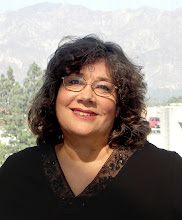
She shot the photo of me that you see at the top of this post. I was completely exhausted and in excrutiating pain, yet filled with an unbridled sense of accomplishment.

More on the China trip tomorrow.

Thursday, April 15, 2010

Mystery History -- Solved


Tammy wins with her 9:51 a.m. Tuesday guess "Welcoming Mishima as Pasadena's sister city."

Her answer is not quite specific enough, but that's OK, I'm easy. In the photo above, shot in May 1958 in the council chamber at Pasadena City Hall, Mayor Seth Miller receives a gift from Japan Airlines stewardess Nobu Atsumi as a prelude to an open house the next day during which Pasadena's sister city of Mishima, Japan, would exhibit arts and crafts.

Mishima was adopted as our second sister city in 1957 (Ludwigshafen, Germany, was the first). President Dwight D. Eishenhower founded the Sister Cities program in 1956 to achieve international peace through a people-to-people concept of "twinning" U.S. cities with foreign communities throughout the world.

Here's the portrait of Seth Miller from the Hall of Mayors.


Seth Miller's family arrived in Pasadena in 1919 when he was 9 years old. As an adult he owned an automotive business for many years.

He was elected to the Board of City Directors in 1951. In 1955 he became vice mayor. Then, in 1956 -- during the long period when mayors were elected by fellow council members on a rotation schedule -- he became mayor five months ahead of
schedule following the resignation of Warren M. Dorn, who had been elected to the Los Angeles County Board of Supervisors. Miller served as mayor until 1959.

He passed away in 1967.

Wednesday, April 7, 2010

Through a Glass Wetly


I shot this on Monday at about 11:15 a.m. using a zoom through through the window of my office in the southwest wing on the second floor of City Hall.

There was a lull in the rain at that moment.

The Pasadena Robinson Memorial, seen through the branches of a magnolia tree, is highlighted with a splash of pink. The peach trees, in full blossom, commemorate the state of the Robinsons' birth: Georgia.

The bronze sculptures by Ralph Helmick, John Outterbridge and Stuart Schechter commemorate the lives of Jackie and Mack Robinson. If you've never taken a closer look, stop by sometime because the entire public art installation is extraordinary.

John Outterbridge is one of America’s most prominent African American artists who has another piece of public art in Pasadena: "Window with Ball." Ralph Helmick and Stuart Schechter are well-known artists from the east coast with commissions across the country.

Saturday, June 27, 2009

Pasadena's New Friendship City

Pasadena has five Sister Cities, but many people don't know that we have two Friendship Cities.

The first, established in the late 1980s, is Kasukabe, Japan.

Our newest, as of this week, is Paju, South Korea.

Pasadena Mayor Bill Bogaard and Paju Mayor Ryoo Hwa-Sun sealed the deal on Monday during a signing ceremony in the council chamber here at Pasadena City Hall.


Thursday, May 7, 2009

Mystery History -- Solved


Petrea wins! I have emailed her about her fabulous prize. (D5Rep is disqualified on a technicality -- she works on the inside!)

In the photo above, a drill is taking place in 1944 in the Civil Defense Center in the basement of Pasadena City Hall.

World War II was in full swing, and 1944 was a busy year.

Here's a photo of a sign being put up in front of City Hall identifying the building as a shelter site. Note the loudspeakers above it. These were serious times and everyone needed to be at the ready just in case.


Some additional World War II information:

Victory Park was dedicated as a living memorial to those who fell in World War II. Note that the rose garden is in the shape of a "V." Next time you're in the neighborhood, stop by and take a look around the memorial area, including the dedication plaque at the base of the flag pole. It's really quite nice. There's also a memorial to U.S. Army Staff Sgt. Joe Hayashi, the only Pasadena resident to be awarded the the Medal of Honor (posthumously by President Bill Clinton) for making the ultimate sacrifice during World War II. This photo was taken on Memorial Day so the flag was at half-staff.


The Vista del Arroyo Hotel was taken over by the federal government and converted to a U.S. military hospital during World War II. Today it is still owned by the federal government and serves as one of the locations for the U.S. Ninth Circuit Court of Appeals.


Two of Pasadena's five sister cities -- Ludwigshafen, Germany, and Mishima, Japan -- were "adopted" post-war so Pasadena could help the cities' civilians get their lives and their communities back to normal.

The bombing of Pearl Harbor on Dec. 7, 1941, put the entire west coast of the U.S. on high alert, forcing the cancellation of the Rose Parade on Jan. 1, 1942, as a precaution. The Rose Bowl Game was moved to Duke University (score: Oregon 20, Duke 6). Anyone who has one of these tickets may be sitting on a gold mine because they were useless and had to be reprinted!


The astronomy program managed by Caltech came to a halt during part of the war because most of the engineers and scientists involved in the program were reassigned to war-related projects.

What will the next Mystery History photo be? You'll have to wait until next Tuesday to find out!